The New Aesthetic of a Digital Generation
In an age of glass screens and algorithmic feeds, a quiet revolution is happening within our four walls. Architectural engineer Merhan Ali El Temsahi explores the "New Aesthetic"—where rotary phones and raw wood grains serve as emotional anchors in a constant digital flow.
MA
Merhan Ali
29/03/2026
There is a quiet shift happening in the visual language of spaces. It is not announced through manifestos or architectural movements, and it rarely appears in textbooks. Instead, it reveals itself in small fragments: a vintage telephone on a walnut desk, a wall covered in patterned wallpaper, a library corner lit by a warm lamp, a sculptural chair that looks more like art than furniture.
Platforms such as Pinterest and Instagram have become the unexpected galleries where this new visual culture is assembled and shared. This is not simply interior decoration. It is the emerging aesthetic of a generation.
For decades, contemporary architecture has often pursued minimalism and abstraction. Clean surfaces, neutral palettes, and restrained spaces dominated design discourse. But the generation now shaping visual culture grew up surrounded by digital screens, endless images, and algorithmic feeds. Paradoxically, the more digital their environment became, the stronger their attraction to the tactile and the nostalgic.
The result is an aesthetic that feels both contemporary and strangely familiar.
Objects from the analog world are returning as emotional anchors within spaces. Rotary phones, record players, heavy books, and handcrafted ceramics appear not merely as decorative pieces but as symbols of permanence in a culture defined by constant digital flow. These objects slow the pace of the room. They invite touch, memory, and presence.
At the same time, materials are gaining new importance. Instead of smooth, anonymous surfaces, spaces now celebrate texture. Wood grains are left visible. Brass ages naturally. Stone and ceramic surfaces show imperfections. These choices create interiors that feel warmer, more human, and less industrial.
Furniture, too, is evolving. Rather than disappearing quietly into the background, many contemporary pieces behave almost like sculptures. Chairs twist, tables curve, lamps float like objects from a surreal still life. A single piece can become the visual center of a room, transforming furniture into an expressive element rather than a purely functional one.
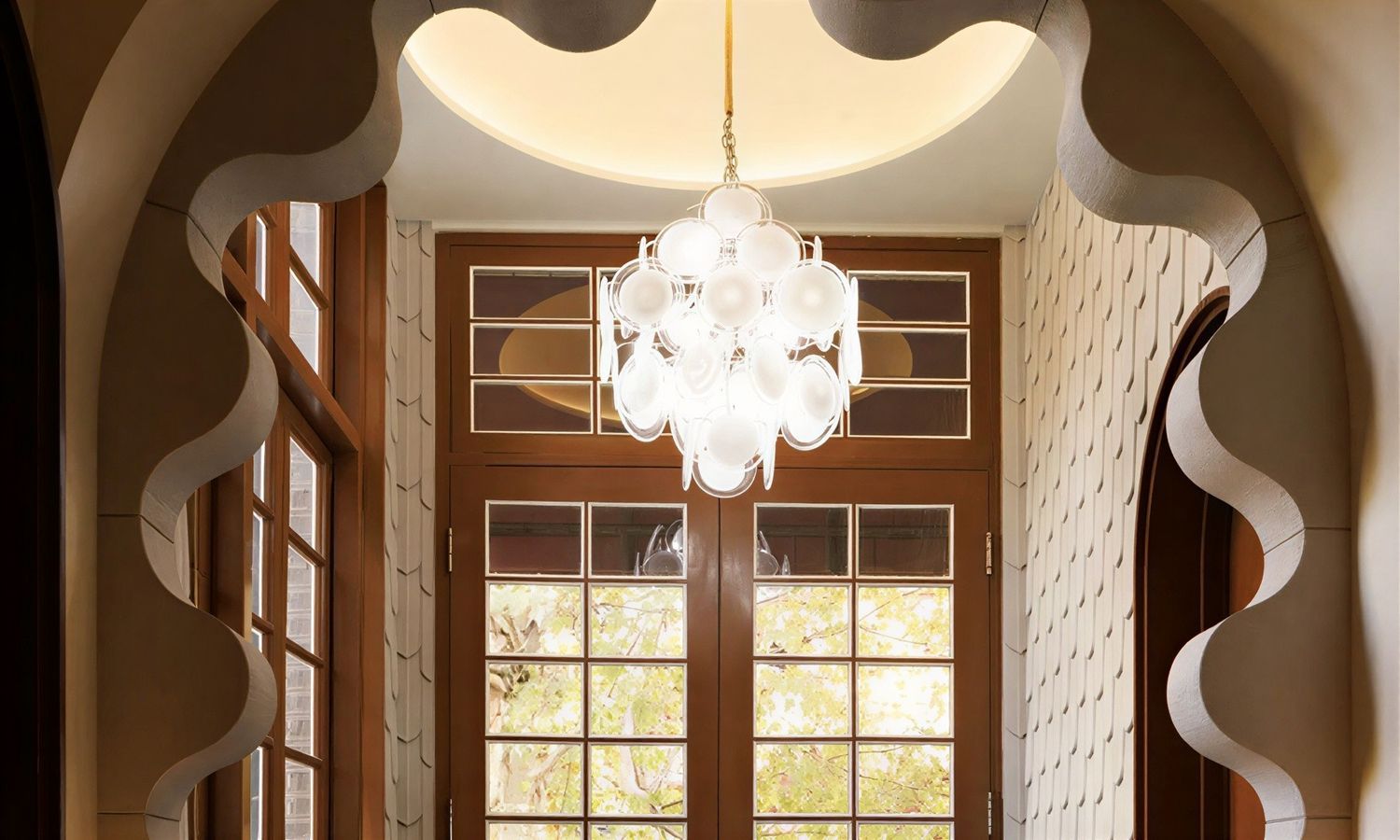
Lighting plays an equally significant role in shaping this atmosphere. Bright, evenly distributed illumination—once the hallmark of modern interiors—is increasingly replaced by softer, layered lighting. Lamps, wall lights, and concealed sources create pockets of shadow and warmth, giving spaces a cinematic quality. Rooms are no longer simply lit; they are staged.
Scroll through design feeds today, and a pattern emerges. Rooms feel more cinematic, more curated, and more intentional. Materials are warm, textures are layered, and objects seem chosen not only for their function but for the stories they carry.
Perhaps the most defining quality of this new aesthetic, however, is narrative. Spaces today are often designed to tell stories. Bookshelves are arranged like personal archives. Objects are curated carefully, each contributing to a larger visual composition. The room becomes a reflection of identity, memory, and taste.
In this sense, design has become less about achieving a perfect style and more about constructing a personal atmosphere.
For architects, this cultural shift raises important questions. If interiors are becoming more narrative and emotionally driven, architecture cannot remain purely formal or abstract. Buildings must begin to consider not only structure and function but also the sensory and emotional experiences they create.
Material choices, lighting strategies, and spatial sequences all contribute to how a place is felt and remembered. The architecture of the future may be defined less by iconic shapes and more by the subtle atmospheres it produces.
Every generation leaves a trace in the spaces it creates. Some leave monuments; others leave movements. The emerging generation may leave something more intimate: environments that feel curated rather than composed, atmospheric rather than monumental.
In a world increasingly dominated by the digital, the new aesthetic seems to be searching for something deeply physical.
Something warm.
Something textured.
Something human.