The Art of Unbecoming: A Conversation with Hana Kashaf
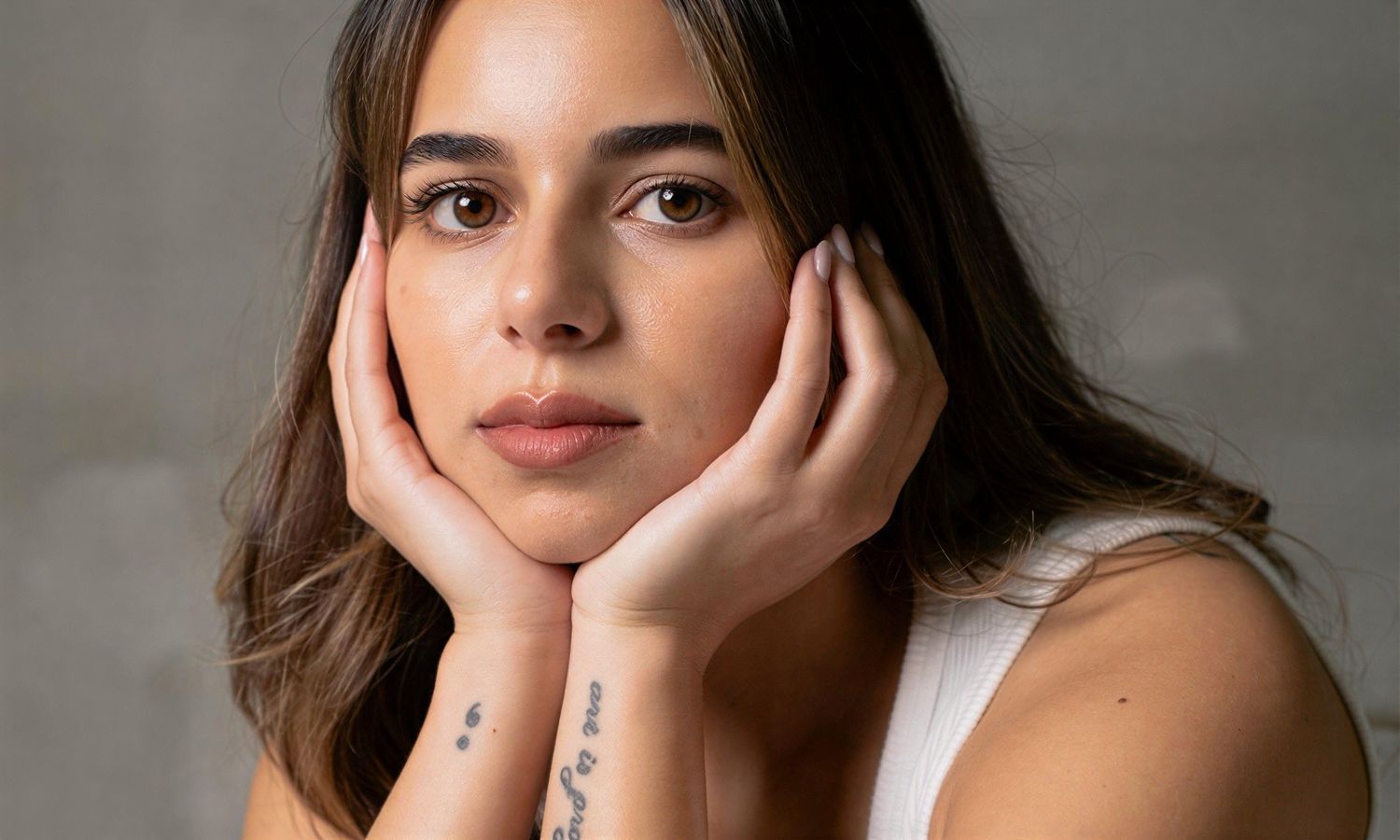
Hana Kashaf is speaking to us from a place of deep reflection, her voice carrying the cadence of someone who has lived several lives before the age of 27. The Egyptian-Canadian actress, known for her gripping performances in Transplant and Ramy, doesn't just play characters; she inhabits the complicated, often messy intersections of identity that define the modern immigrant experience.
ME
Monia El-Temsahi
29/03/2026
Hana Kashaf is speaking to me from a place of deep reflection, her voice carrying the cadence of someone who has lived several lives before the age of 27. The Egyptian-Canadian actress, known for her gripping performances in Transplant and Ramy, doesn't just play characters; she inhabits the complicated, often messy intersections of identity that define the modern immigrant experience.
The Disney Channel School of English
Before she was navigating film set sin Spain or industrial zones in Montreal, Hana was a kid in Egypt "obsessed with Selena Gomez."
"I just wanted to be her," she laughs, recalling her early spark for the craft. "I thought to be her meant I just need to be an actor and I need to make people laugh." But the path wasn't linear. Growing up in Egypt, she felt the frustration of a school system that lacked drama programs. Paradoxically, her education happened at home in front of the TV.
"My mom forced my sister and me to watch English channels without subtitles, that’s really how I picked up the language. I was basically raised on Disney Channel and Animal Planet"
The "White" Roast and the Identity Pivot
When Hana moved to Montreal at 14—following a two-year stint in Syria—she arrived with a fierce, protective love for her heritage. "I wanted to show people what it meant to be Egyptian," she says. But the isolation of being "the only Arab, only Middle Eastern, and only Muslim" in a theater program of over 100 students eventually took its toll.
She describes a period of subconscious assimilation that many diaspora kids know all too well. "I started... acting more 'white.' I was wearing leggings, I was drinking Starbucks every single day... I was starting to speak really Canadian."
he wake-up call came in the form of a "roast" during her graduation, where younger students performed a skit mocking her transformation. "All the jokes were about how white I was... that I was a Starbucks addict and a Lululemon basic white girl."
While it stung at the time, it led to a poetic "unbecoming." By her early 20s, Hana found herself gravitating back toward the Arab community in Montreal. "I started reconnecting with my Arab identity, and that’s when I began coming to Egypt more often."
A Spiritual Alignment in "Hollywood"
Hana’s journey to the acclaimed show Ramy reads like a digital-age fairy tale, beginning with heartbreak and ending with a surprising Instagram notification. After missing out on the initial casting, she woke up one morning to find Ramy Youssef himself following her, shortly followed by a booking request that flew her to Spain.
It was on that set, however, that a more profound shift occurred.
"After we prayed Fajr together on set, I just felt like... having spirituality and belief and faith... can still work well with doing something so artistic," she shares. "I just got to see something that I never thought I would see in 'Hollywood.' I think I had such a perspective... it’s run mainly by people that don’t look like me and people who definitely don’t practice Islam."
The experience was "eye-opening" and "fulfilling," reshaping her understanding of how her faith could coexist with her career. It was a sentiment reinforced shortly after while hanging out with her Transplant co-star, Hamza Haq.
“We were playing basketball when he said, ‘It’s Maghrib time…do you want to go pray?’ I remember thinking, ‘Oh my God, how did I get so lucky to have people like this in my life?’ Being surrounded by other practicing artists influenced her immensely. “It inspired me to find it for myself, to start my own journey toward faith and a deeper sense of groundedness.”
Psychology: The "Arab Mother" Requirement
Despite her rising success, Hana famously jokes that her Psychology degree was a "requirement" from her mother. Last year, during the SAG-AFTRA strike, that "backup plan" became very real.
"My mom was really pushing. She was sending me 10 million links of different courses," she says. To appease her, Hana applied to four Master's programs. “I applied to all of them and didn’t get into a single one. Even though I expected it, I wasn’t ready for that big ‘no.’ But it’s not where my heart is right now.”
Her mother has since accepted the inevitable. "[She's] calmed down... she’s been like, 'Alright, maybe this is a sign. You really have to make it in acting now.'"
Finding "Home" and Forging Chemistry
n the hit series Transplant, Hana played a Syrian refugee—a role that hit incredibly close to home, having lived in Syria for two years as a child.
"I was already living the news every single day.." she explains. The set, a muddy industrial zone outside Montreal with 40 UNHCR tents, was immersive. "I found a safe space to let [the emotions] out... “I felt a responsibility to make people feel seen and understood on screen.”
The chemistry she built with her co-stars is essential to her process, a focus that mirrors her past as an athlete. Although she played basketball and soccer growing up, she claims she lacked the competitive edge. "I was more of a people pleaser... I hated when a ball got past me... because my teammates were losing."
Now, that mindset makes her a dedicated collaborator on set. "I have to be there. I have to be in this world. I have to build the connection with the actors off camera so that when we’re on camera, we have that chemistry ready to go."
"Collecting Herself" and the Future Short Film
Currently "chilling" in Egypt and enjoying invaluable family time before an intensive acting program in New York, Hana is focused on grounding herself. If she were to direct a short film about her life right now, the vibe would reflect this current inner stillness.
It would be "slow-paced" and "quiet," she tells me. "I think it would mainly be me alone in certain shots and then other shots maybe with my sisters, my nieces... on the inside right now, I feel very grounded. I feel very sane and calm."
As for her future, she isn't chasing a specific "I made it" moment. "I’m always going to want to do more. I’m always going to want to do my best." While many ask if she plans to work in Egypt, she admits she doesn't professionally see herself working here, though she's "a very go with the flow type person" and wouldn't close the door on the right project. "It’s not something I’m working towards. But if somehow it falls into my lap, who am I to say no to a good job opportunity?"
A Call to Arms: Reshaping the Narrative
Before our conversation ends, Hana delivers a powerful, urgent message regarding the ongoing genocide in Palestine and the critical role of media representation.
"Palestine... it runs in our blood," she says. She shares how watching Amr Waked’s early role in Ashabu ala Business—where he played a Palestinian who sacrifices himself—shaped her initial understanding of that identity. "I will always remember it... He did such a good job with that role that I will always remember what it is to be... Palestinian."
Witnessing the atrocities since October 7, 2023, Hana struggled with the devastating reality. "Why are we okay with this? ... Why are we living on and not being more angry?"
The realization, she explains, is rooted in decades of dehumanizing representation in Western media. Consuming outlets like Disney’s Aladdin or endless CSI shows that depict Arabs and Muslims solely as terrorists and "inhumane" has had a cumulative effect. "It’s taken decades for the media to paint our people this way. That it somehow... dehumanized us and made it okay for you to be scrolling on Instagram, seeing dead babies blown up. And it’s like, 'Oh, that’s in Palestine. What are we going to do?' and scroll past it."
It is this profound disconnect that fuels Hana's artistic purpose today.
"Unfortunately, if we want to influence politics, we need to influence the media first. And if we want to influence the media, then we really need to be a part of it."
Her message to aspiring creatives in the diverse EMMA readership is clear: take control of the narrative. "Focus on creating your own stories... let’s start focusing on our own culture because we carry so much. We have so much more to offer. And we just need to start putting ourselves forward more."