Noureldin Adel: Believe in the Clichés
On growing up online, being misunderstood, disappearing to find yourself, and learning that sometimes the person behind the content is the real story.
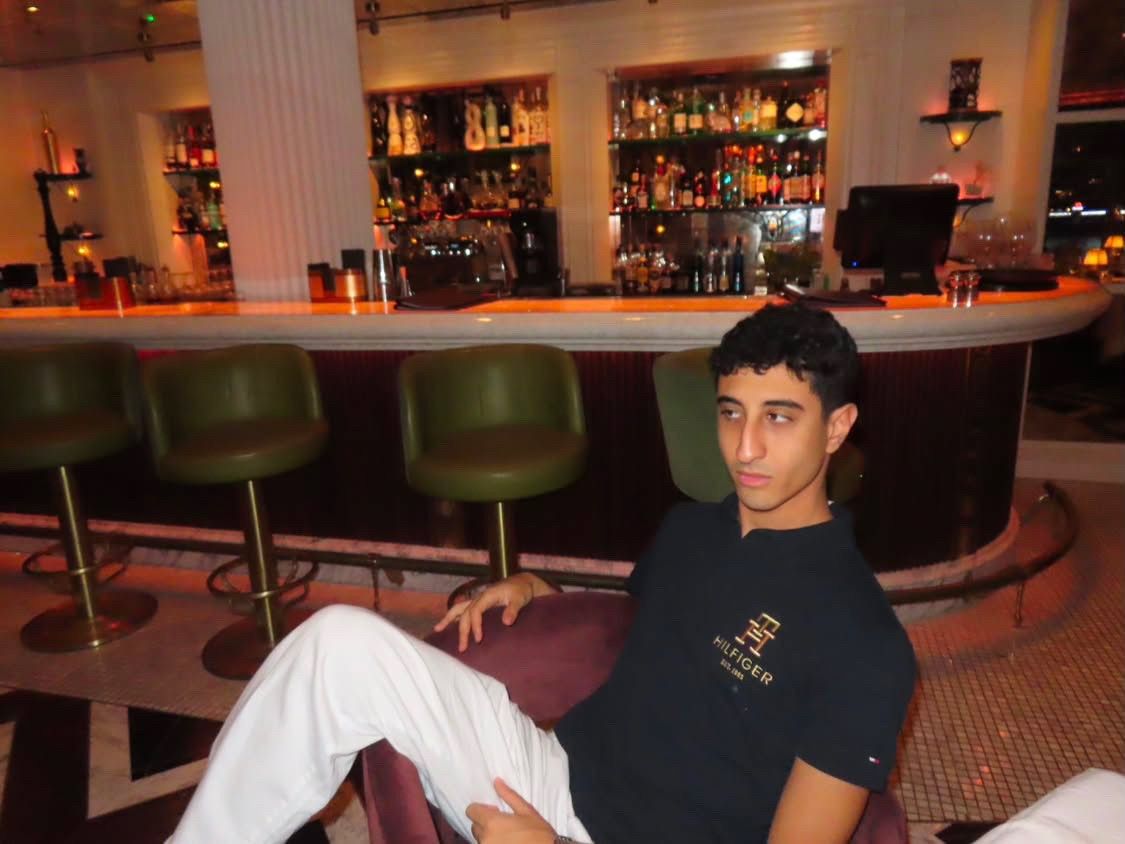
ME
Monia El-Temsahi
22/08/2026
There is something almost ironic about becoming known for being yourself when, for years, you were trying to hide.
For Noureldin Adel, the internet became the place where that contradiction played out in real time. Before the millions of views, the campaigns, the acting workshops and the life of a content creator, there was a teenager who simply wanted to be seen—but not necessarily understood.
Today, Noureldin is studying digital production and storytelling in Dubai, while quietly working toward the dream that was there long before TikTok: acting. His story isn't really about becoming an influencer. It's about what happens when the version of yourself that the world falls in love with isn't necessarily the version of yourself you were trying to become.
And perhaps, more importantly, it's about what happens when you stop trying to control how people see you.
The Story Behind the Story
Noureldin has always viewed life through a cinematic lens. He describes himself as someone who “romanticizes” his life—not romantically, but visually, almost like he's constantly watching his own existence as a film.
It makes sense, then, that he ended up studying digital production and storytelling.
But when asked whether he has ever thought about turning his own life into a film, his answer is surprisingly complicated.
“I can't put my hand on one thing that created Nooruddin,” he says. “There's many things that created me.”
His own story feels too expansive to reduce to one scene, one trauma, one turning point. And perhaps that's why he would rather someone else tell it.
“If someone needs to tell my story, it shouldn't be me. It should be someone else.”
There is something beautifully self-aware about that. We spend so much of our lives trying to explain ourselves—to make people understand why we are the way we are. Noureldin seems to have arrived somewhere quieter: maybe we don't always get to control the story people take away from us.
Because being misunderstood, he admits, is one of his biggest fears.
“When you're misunderstood, it's scary,” he says. But eventually, he learned that no matter how carefully you tell your story, people will always filter it through their own experiences.
“Not everyone's gonna perceive what you say in the way you want to be perceived.”
His conclusion is simple: “Let people think what they want to think.”
When the Internet Sees Through You
Long before his current account, Noureldin had already experienced what it meant to be watched.
At just 15, he had built an account to around 23,000 followers. But instead of feeling celebrated, he found himself being scrutinized. People began commenting on the parts of him he was trying hardest to hide.
Eventually, the account was mass-reported and banned. In one day, he received around 200 reports.
He remembers being devastated. He thought his dream was over.
But losing that account forced him to start again—and this time, he did something different.
He stopped trying so hard to hide.
His first video on his new account was an acting sketch, with him playing different characters around his house. The next morning, he woke up to something he could hardly have imagined: 100,000 new followers in a single day.
For Noureldin, the lesson was bigger than TikTok.
“If you try to hide yourself, people are gonna see you the way you are,” he says. “So you might as well just be you from the beginning.”
It is a lesson he learned painfully early: sometimes authenticity isn't about revealing more. It's about no longer being afraid of what people might find.
And it is also where his belief in clichés comes from.
“Believe in clichés,” he says. “Clichés are real.”
The phrases we roll our eyes at—don't give up, keep going, chase your dreams—can sound almost insulting when you're in the middle of something painful. But Noureldin has lived through the part that comes before the cliché becomes true.
He kept going.
And eventually, something changed.
The Disappearance Nobody Saw
Success came quickly. Followers grew. Campaigns came in. Deals followed.
And then, Noureldin disappeared.
To anyone watching from the outside, it may have looked like he had simply lost interest. But the reality was almost the opposite.
He needed to find himself outside of the internet.
He took a break from social media that lasted nearly two years. During that time, he focused on his mental health, went to therapy, took acting workshops, auditioned, spent time with the people he loved and learned to establish boundaries.
The internet saw absence.
Noureldin saw progress.
“People don't know what someone has planned for their life,” he says. “You don't know what someone's going through or you don't know what they're doing in their life.”
And perhaps that's one of the strangest things about growing up online: everyone can see when you stop posting, but almost no one can see what you're actually doing with your life.
For Noureldin, the silence wasn't stagnation. It was preparation.
He has already auditioned for projects and been cast in some that have yet to be filmed. He is still studying. Still taking workshops. Still chasing acting.
The dream didn't disappear.
He just stopped announcing it.
“Stop speaking about your future and start thinking about it.”
The Power of Keeping Things to Yourself
Noureldin is almost evangelical about keeping your plans private.
“I didn't even tell my family I wanted to start TikTok. I didn't even tell my family I wanted to start acting.”
He believes that there is something powerful about allowing a dream to exist privately before exposing it to everyone else's opinions.
His driver's license became another example. When he told people he was going to take the exam, he kept failing. Eventually, he stopped telling people.
Then he passed.
“It's always when you don't tell people,” he says. “Stop speaking about your future.”
Whether you call it manifestation, faith, psychology or simply protecting your peace, the idea is familiar: not every dream needs an audience while it's still becoming real.
Sometimes the most important person who needs to believe in it is you.
Becoming More Himself
Now living and studying in Dubai, Noureldin says the city has influenced him—not necessarily by changing his aesthetic, but by helping him become more comfortable with who he already was.
“Dubai has made me accept myself more,” he says.
And that acceptance has inevitably found its way into his content.
Perhaps that's why his videos feel different now. There is less of an attempt to manufacture a personality and more willingness to simply exist inside one.
Even his humour has a deeper purpose.
Take his infamous roller coaster video. While everyone else might have been watching his friends' reactions, Noureldin was singing, making jokes and narrating his own fear all the way to the top.
For him, comedy isn't just entertainment.
It's survival.
“When life gets stressful, when life makes you scared, when you're scared, when you're insecure about something… laugh about it,” he says. “It will pass.”
But beneath the humour is something much more serious: presence.
He believes that fear, anxiety, insecurity and uncertainty are all part of being human. The mistake is thinking that because you're experiencing something painful now, you will experience it forever.
His answer is to stay in the moment.
“Whatever you feel in it, it's okay to feel, because that means you're being present.”
For Noureldin, even faith is tied to that idea of presence—to accepting that whatever you're feeling right now is temporary, and trusting that it will pass.
And suddenly, the roller coaster becomes more than a TikTok.
It becomes a metaphor.
Life Is a Roller Coaster
Perhaps that is the thread running through Noureldin's story.
The account that disappeared. The followers who turned against him. The new account that exploded overnight. The success wasn't enough. The years away from social media. The acting dream that never really left. The fear of being misunderstood. The decision to stop explaining himself.
There is no single moment that created him.
There are hundreds.
And maybe that's the point.
We are all made up of too many stories to fit neatly into one.
Noureldin's journey is still unfolding. He is still studying. Still auditioning. Still figuring things out. Still becoming.
But if there is one thing he seems certain about, it's that none of us should mistake a difficult chapter for the ending.
“Believe in clichés,” he says again.
Maybe we should.
Maybe don't give up isn't cliché because it isn't true.
Maybe it's cliché because it's true so often.
And maybe, sometimes, the person you are desperately trying to become is simply the person you were all along—waiting for you to stop hiding.